
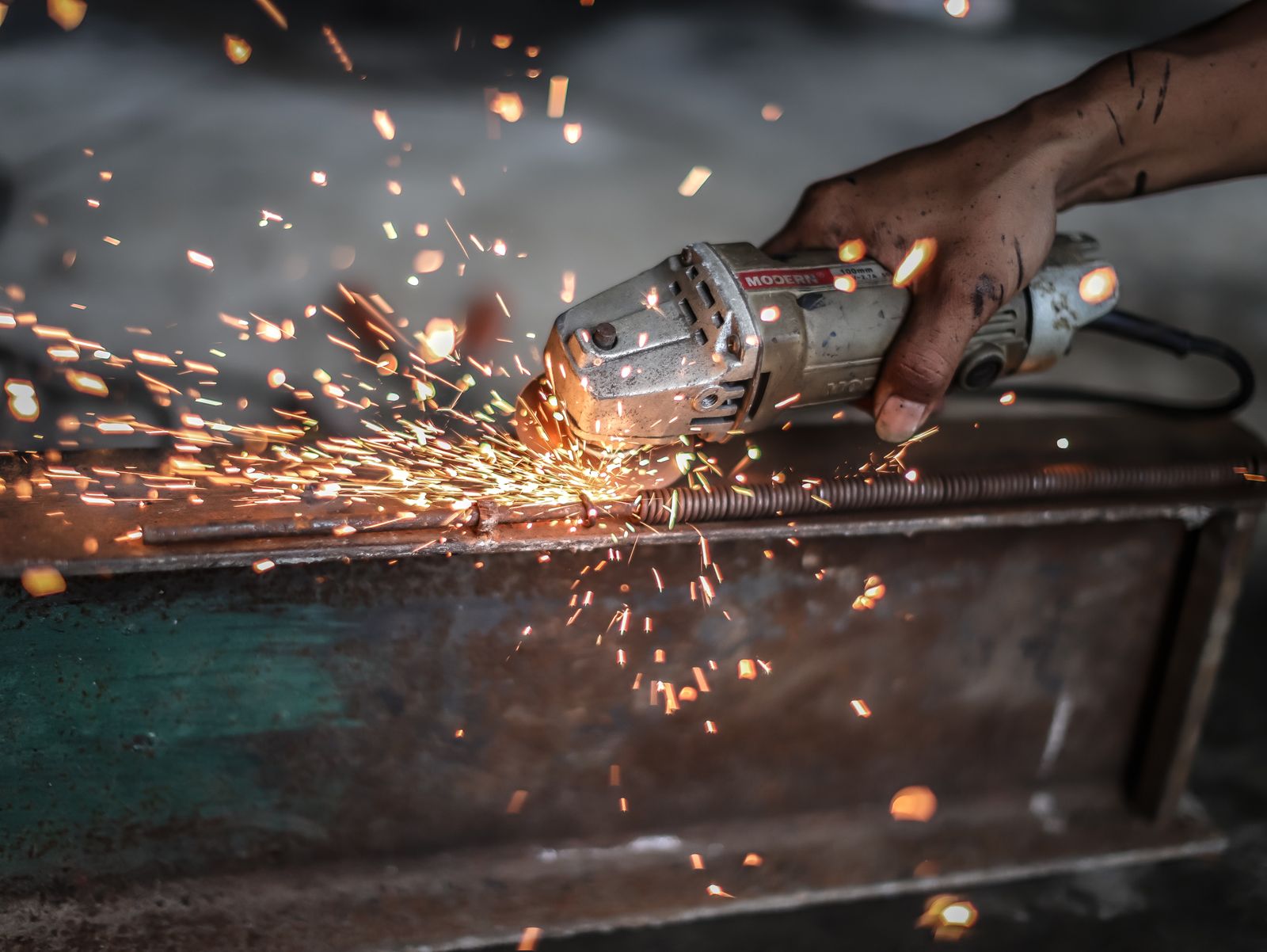
Why Periodic Maintenance Matters for Blasting Machines
Blasting machines are subject to constant abrasive flow and high-velocity particle impact, which makes them wear far faster than most other production equipment. Run a blasting line without a planned maintenance program, and surface quality drifts out of consistency over time while unplanned downtime disrupts the production schedule. In this article, we cover the critical points that need regular inspection on both drum and hanger blasting machines.
Regular Inspection of Wear Parts
On turbine-type blasting systems, the blast wheel blades and liner plates gradually thin out from direct contact with the abrasive stream. A worn blade changes both throw velocity and the abrasive's distribution angle, producing an inconsistent result across the surface. On manual-gun systems, the nozzle bore widens with wear, which means lower abrasive velocity at the same pressure and a loss of efficiency. In both cases, regular measurement and visual inspection — followed by timely replacement of parts that have reached their wear limit — protects surface quality and prevents wasted abrasive and energy.
Rubber Liner and Seal Wear Inside the Cabin
The rubber liners that protect the cabin walls from abrasive impact gradually thin over time and begin to carry a risk of puncturing. A punctured liner exposes the cabin shell itself to direct wear and lets abrasive leak through. Wear on door and panel seals can cause the cabin to lose negative pressure, letting dust escape outside the cabin. Periodic visual inspection of these components is a simple but effective step that heads off much larger repair costs.
Conveyor and Drum Bearing Lubrication
On drum blasting machines, the bearings that drive the drum's rotation and the moving components of the conveyor system need to be lubricated at the intervals the manufacturer specifies. An under-lubricated bearing first shows up as friction-driven heat and increased noise; left unaddressed, bearing failure can bring the whole line to a stop. Tracking the lubrication schedule against operating hours also prevents premature wear caused by abrasive dust working its way into the bearings.
How Filter and Dust Collection Maintenance Interacts with Machine Performance
A blasting machine's efficiency can't be evaluated independently of the condition of the dust filtration unit it runs with. A filter that's starting to clog weakens suction inside the cabin, reducing visibility and letting dust accumulate — which in turn indirectly affects blasting quality. That's why the machine maintenance plan needs to be managed together with the filter cleaning cycle and replacement schedule.
Checking for Abrasive Contamination
On lines running with a recovery system, oil, moisture, or foreign material mixed into the abrasive can both degrade surface quality and cause additional wear on the equipment. Regularly checking abrasive samples visually — and in the lab when needed — catches these issues before they show up in production.
The Concrete Benefits of a Maintenance Schedule
- Batch-to-batch consistency in surface roughness and blasting quality
- Fewer unplanned stoppages and lower emergency-repair costs
- Lower total maintenance spend through planned replacement of wear parts
- Longer overall equipment service life
A documented maintenance schedule doesn't just prevent breakdowns — by planning ahead for which part needs replacing and when, it also makes spare-parts procurement predictable.
At Abray Makina, we provide manufacturer-approved spare parts support and periodic maintenance planning for the drum and hanger blasting machines we manufacture.
Let's Build a Maintenance Plan for Your Blasting Equipment
Share your equipment model and usage intensity, and we'll build the maintenance schedule together.