
Blasting and Painting Applications in Shipbuilding
Steel blocks and hull sections built in shipbuilding are exposed to constant salt water, humidity, and marine atmosphere throughout their service life. This harsh corrosive environment makes the quality of surface preparation and painting far more critical than in most other industries. In this article, we look at how shipyards should approach blasting and painting applications.
The Corrosion Pressure the Marine Environment Puts on Steel Structures
A hull and other marine structures face a far more aggressive corrosion risk than steel structures on land; salt water, constant humidity, and sea spray drive rust that advances quickly from any weak point in the protective coating. For this reason, surface preparation in shipyards needs to target a higher degree of cleanliness than standard industrial applications. A paint system applied over an inadequately prepared surface leads to premature coating failure and costly repair cycles over the vessel's service life.
Choosing the Right Blasting Method for Large, Complex Block Sections
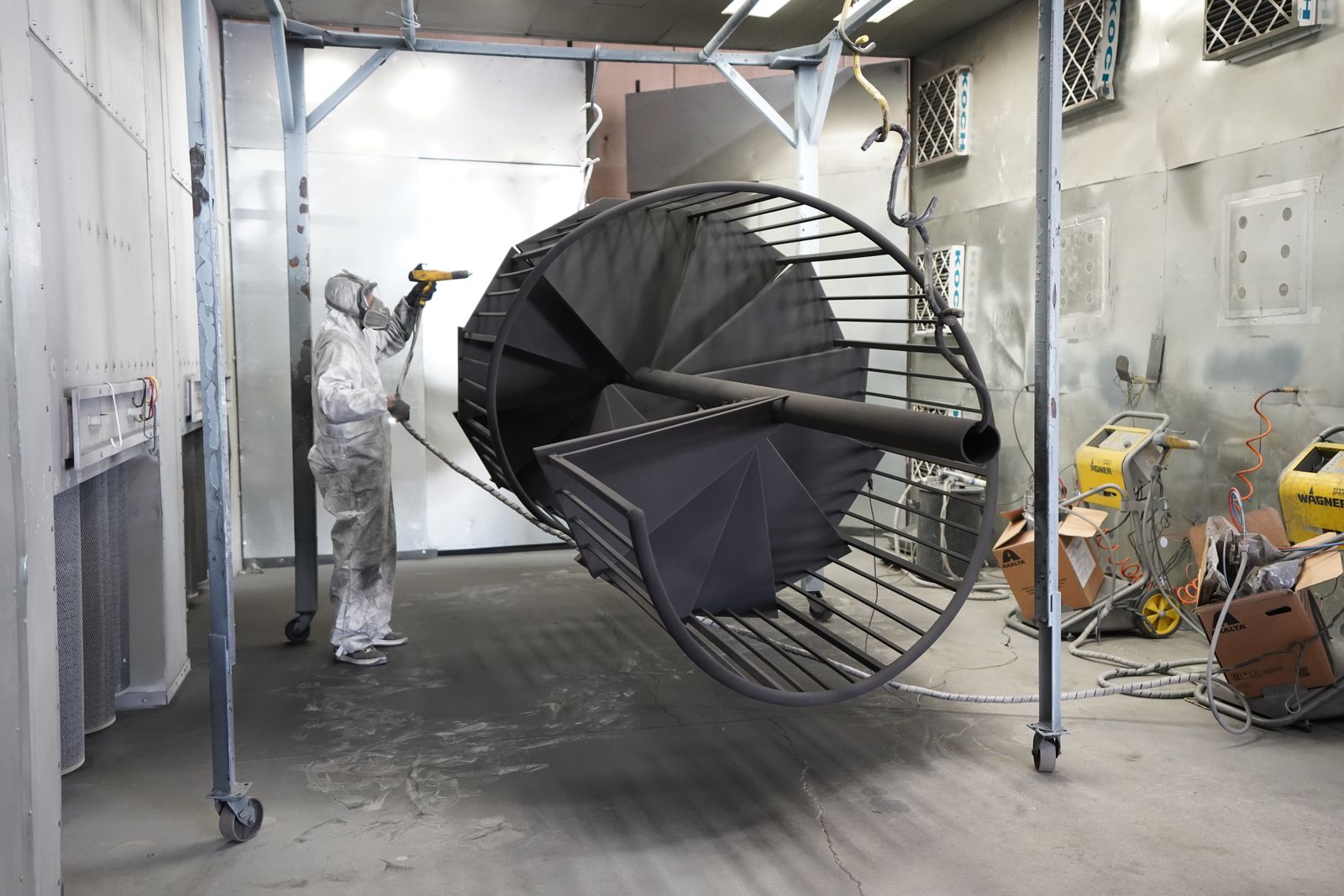
Ship blocks generally exceed the capacity of standard drum-type blasting systems, both in size and geometric complexity. Drum systems suit small parts with relatively regular geometry, while hanger-type or open-area blasting systems are a far better fit for large hull blocks and complex profile elements. These systems give access to every surface regardless of part size, and produce a uniform surface roughness even in hard-to-reach areas like internal corners and weld seams.
Multi-Coat Marine Paint Systems and Surface Cleanliness Requirements
Paint systems used on marine structures usually consist of multiple layers — primer, intermediate coat, and top coat — and each layer's performance depends on the surface roughness and cleanliness of the one beneath it. Dust, oil residue, or salt traces left on the surface after blasting can weaken the adhesion of the first coat and shorten the life of the entire system. Tightly controlling the transition time and surface cleanliness between blasting and painting is therefore a precondition for a multi-coat system to deliver its expected protective performance.
Aligning the Blasting-Painting Schedule with Block-Construction Shipyard Workflow
In modern shipbuilding, the hull is built as separately produced blocks that are later joined together, and each block goes through its own blasting and painting process before assembly. In this production model, if the blasting-painting line's capacity doesn't keep pace with block production, blocks either sit waiting at the painting station or the assembly area fills up with a backlog of material. Planning line capacity alongside the block production schedule keeps the shipyard's overall workflow moving without disruption.
Key points to consider when choosing a blasting-painting system for shipyard projects:
- The average and maximum dimensions of the blocks/parts to be processed
- The target surface cleanliness grade and paint system requirements
- The transition time between the blasting and painting stations
- How well the line's capacity matches the block production rate
At Abray Makina, we design hanger-type blasting systems and integrated painting solutions for the surface preparation of large-scale, geometrically complex ship blocks. Share your part dimensions and production volume with us, and we'll help determine the right system for your shipyard.
Let Us Be Your Solution Partner for Shipyard Projects
Share your part dimensions and production volume, and we'll determine the right system together.