
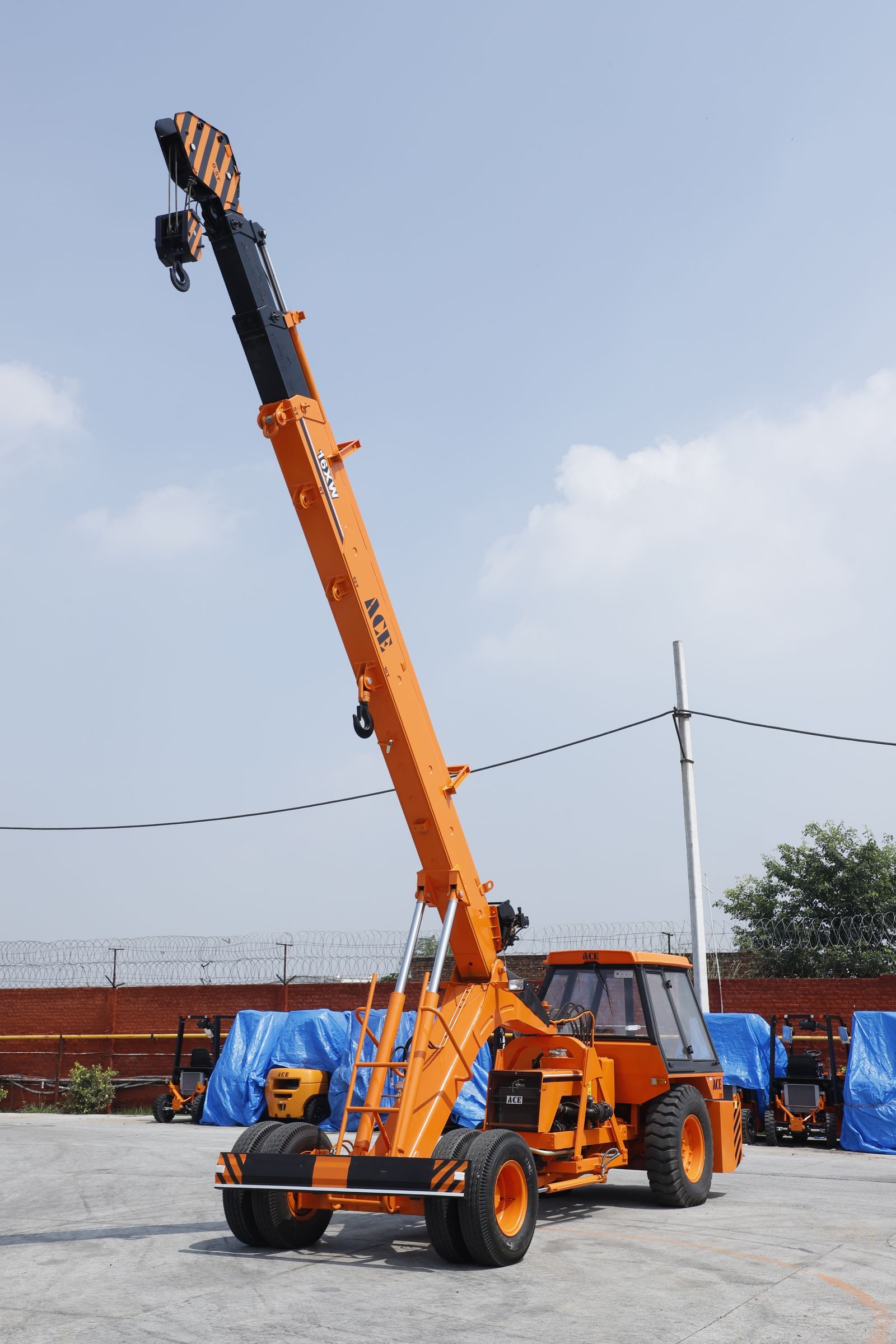
Mobile Crane or Tower Crane? Choosing the Right Type for Your Site
One of the most fundamental questions when planning a lifting-equipment investment is whether to choose a mobile crane or a tower crane. Both equipment types serve the same basic purpose of lifting loads, but their operating principles, cost structures, and the project profiles they suit best differ considerably. The right decision depends on your project's duration, site conditions, and budget.
Project Duration and Frequency of Use
Tower cranes are designed for high-rise construction projects that run for months, even years. They stay fixed on site, providing uninterrupted service throughout the project and paying off their investment over that time. Mobile cranes, on the other hand, are more economical for short-term jobs, installation work, or rotating use across multiple sites. Investing in a tower crane setup for a lift that only takes a few days or weeks makes little sense from either a time or cost standpoint.
Site Mobility and Relocation Needs
A mobile crane's biggest advantage is that it can travel easily from one point to another on its own wheels or tracked chassis. On sites that require lifting at multiple points — pipeline laying, power plant installation, or prefabricated structure assembly, for example — this flexibility saves significant time. Tower cranes, being mounted on a fixed foundation, cannot relocate; the entire work area must instead be planned around the crane's slewing radius and jib length.
Setup Time and Logistics
Mobile cranes are ready to work within a short time of arriving on site, once their outriggers are extended and leveled — a major advantage for urgent or unplanned lifting needs. Tower crane installation, by contrast, is a multi-day process involving foundation preparation, assembling the crane structure section by section, and adding tower modules as height increases. This process also typically requires a crane operator, an assembly crew, and often a separate assist crane.
Capacity and Reach at Height
Tower cranes stand out because their capacity loss with height is far more limited than that of mobile cranes; they can lift substantial loads even at jib tip on upper floors. Mobile cranes, on the other hand, see a marked drop in lifting capacity as boom angle and length increase, which makes moving heavy material to upper floors of very tall structures impractical. If a high-rise building's structural phase requires regular, high-capacity lifting, a tower crane is the better fit; for targeted lifts at moderate heights, a mobile crane is usually the more sensible choice.
Cost of Ownership and Efficiency
- Tower crane: higher setup cost, but a cost-per-hour advantage over long project durations
- Mobile crane: lower setup cost, more efficient for short-term and scattered jobs
- Tower crane: requires a dedicated operator and maintenance crew, and a continuous power connection
- Mobile crane: operates independently with its own power unit and can be dispatched easily between sites
- For both types, selecting the correct capacity is essential for both safety and avoiding unnecessary cost
Which One Should You Choose?
As a general rule, a tower crane is the right choice for high-rise projects running for months that need continuous, high-volume lifting from a single point, while a mobile crane suits short-term, portable work or jobs spread across multiple sites. On many large projects, both equipment types are used together at different stages: a mobile crane for foundation and infrastructure work, for instance, followed by a tower crane once the structural phase begins.
At Abray Makina, we manufacture both mobile cranes and tower cranes, and we provide engineering support to help you choose the right solution based on your project's duration, site conditions, and budget.
Let's Evaluate Your Crane Needs Together
Share your project timeline and site conditions, and we'll recommend the right crane type.